How to Install, Configure, and Sync Secrets with the Vault Secrets Operator
The Vault Secrets Operator (VSO) makes it easier than ever to bring HashiCorp Vault secrets into Kubernetes—securely, natively, and without adding...
The Vault Secrets Operator (VSO) makes it easier than ever to bring HashiCorp Vault secrets into Kubernetes—securely, natively, and without adding Vault-specific logic to your workloads. Whether you’re running on a self-managed cluster, using a managed Kubernetes service, or operating in a multi-cloud environment, VSO provides a streamlined, GitOps-friendly way to keep your workloads supplied with the credentials, API keys, and certificates they need.
In this post, I’ll walk you through the full workflow:
Installing the Vault Secrets Operator
Configuring connectivity and authentication with Vault
The easiest way to install VSO is with HashiCorp’s official Helm chart. This ensures a consistent, repeatable setup across all your environments.
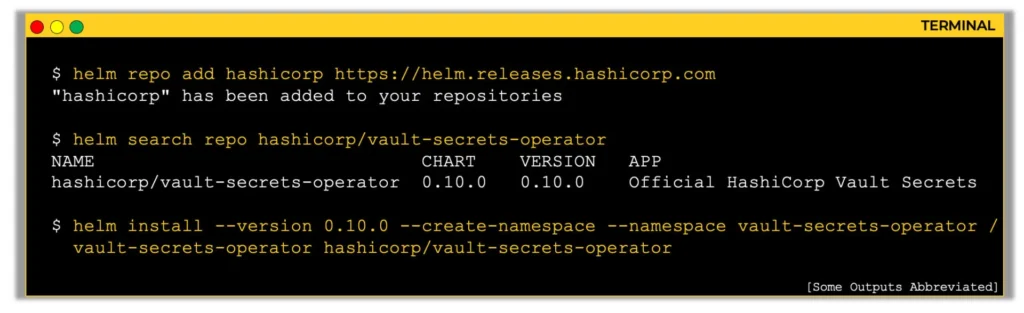
VSO runs in its own namespace, which helps keep things clean and allows you to manage permissions independently from your workloads. The installation process looks like this:
Add the HashiCorp Helm repository so Helm knows where to fetch the chart.
Search for the chart to verify availability.
Run the Helm install command to deploy the operator into its namespace.
--version 0.1.0 pins to a known version so behavior stays consistent.
--create-namespace ensures the namespace exists.
The release name vault-secrets-operator is how Helm will track this install.
The chart name hashicorp/vault-secrets-operator points to the official source.
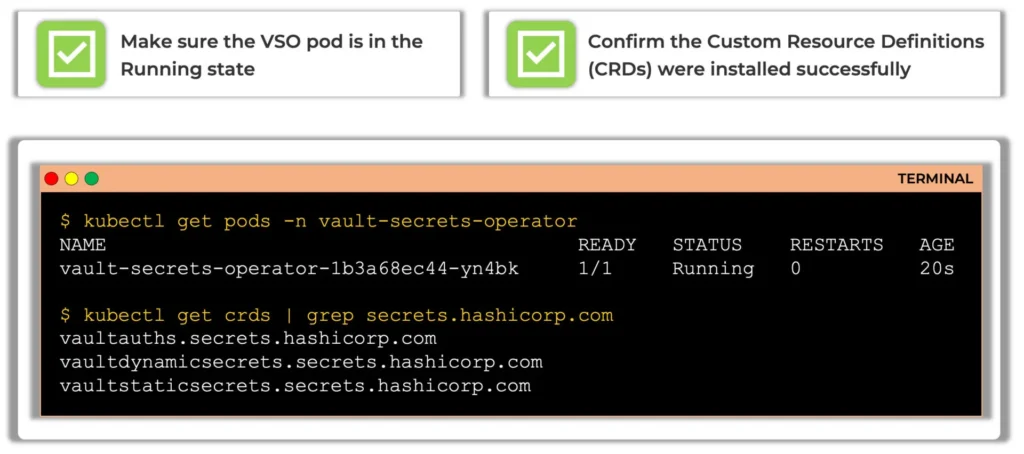
Once installed:
Run kubectl get pods -n vault-secrets-operator to confirm the operator is running.
Check the CRDs with kubectl get crds | grep secrets.hashicorp.com to ensure VSO-specific resources like VaultAuth, VaultStaticSecret, and VaultDynamicSecret are registered.
Step 2: Configuring the Vault Secrets Operator
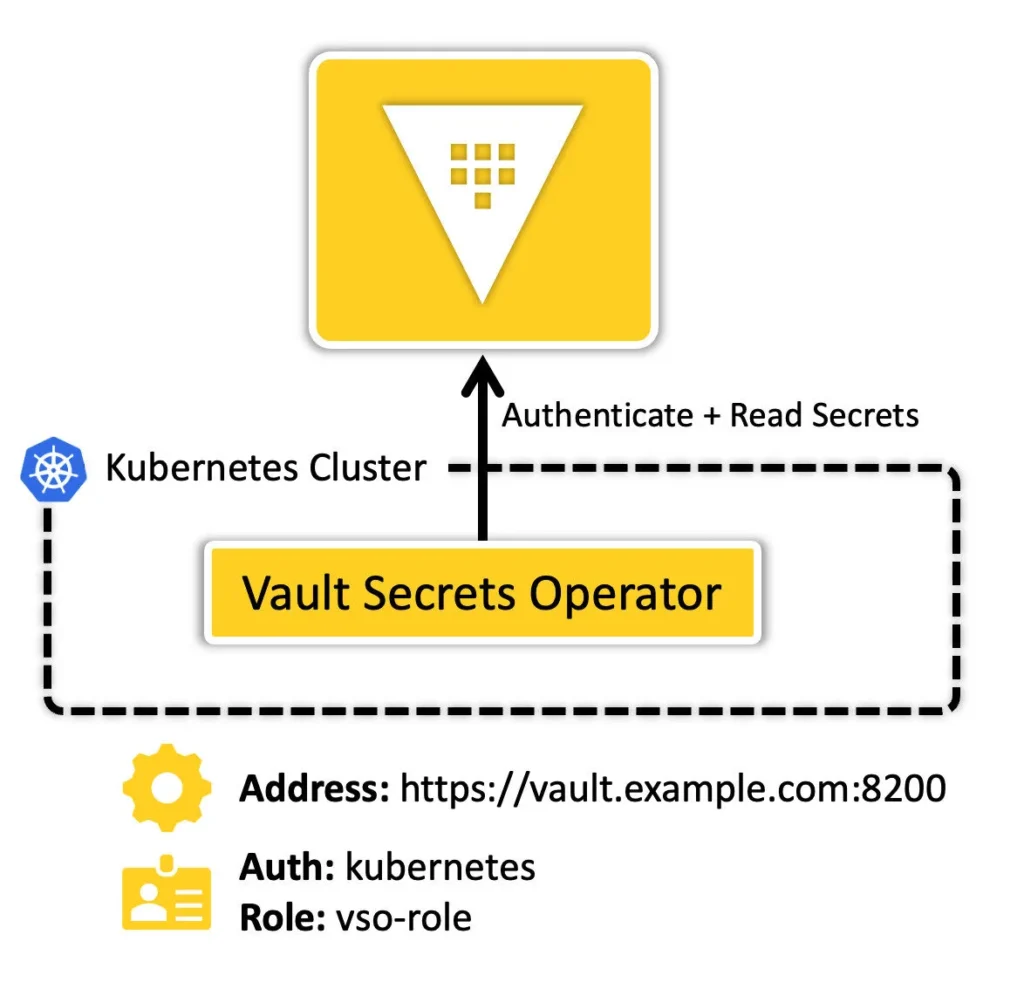
Like any Vault client, VSO needs two things:
Where to find Vault (Vault address)
How to authenticate (Auth method)
You’ll define this using Custom Resources (CRs) based on VSO’s Custom Resource Definitions (CRDs).
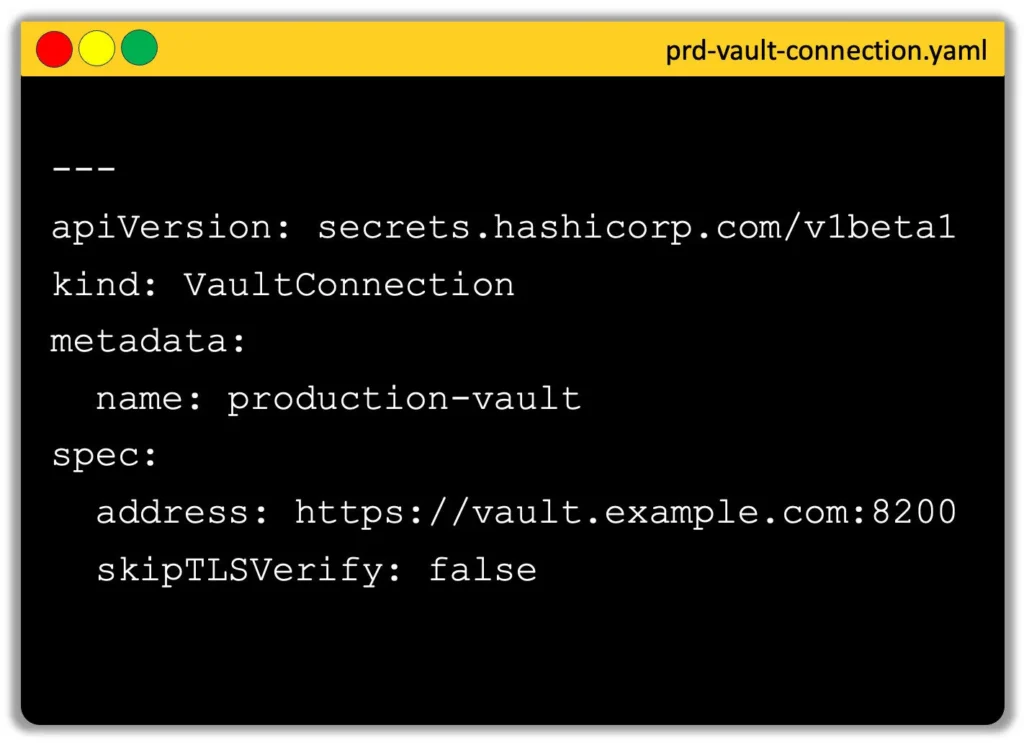
VaultConnection CR
The VaultConnection CR tells VSO how to reach your Vault cluster—whether it’s in the same Kubernetes cluster, running externally, or hosted on HCP Vault. This CR includes:
You can create multiple VaultConnection CRs if you need to connect to different Vault clusters or environments.
VaultAuth CR
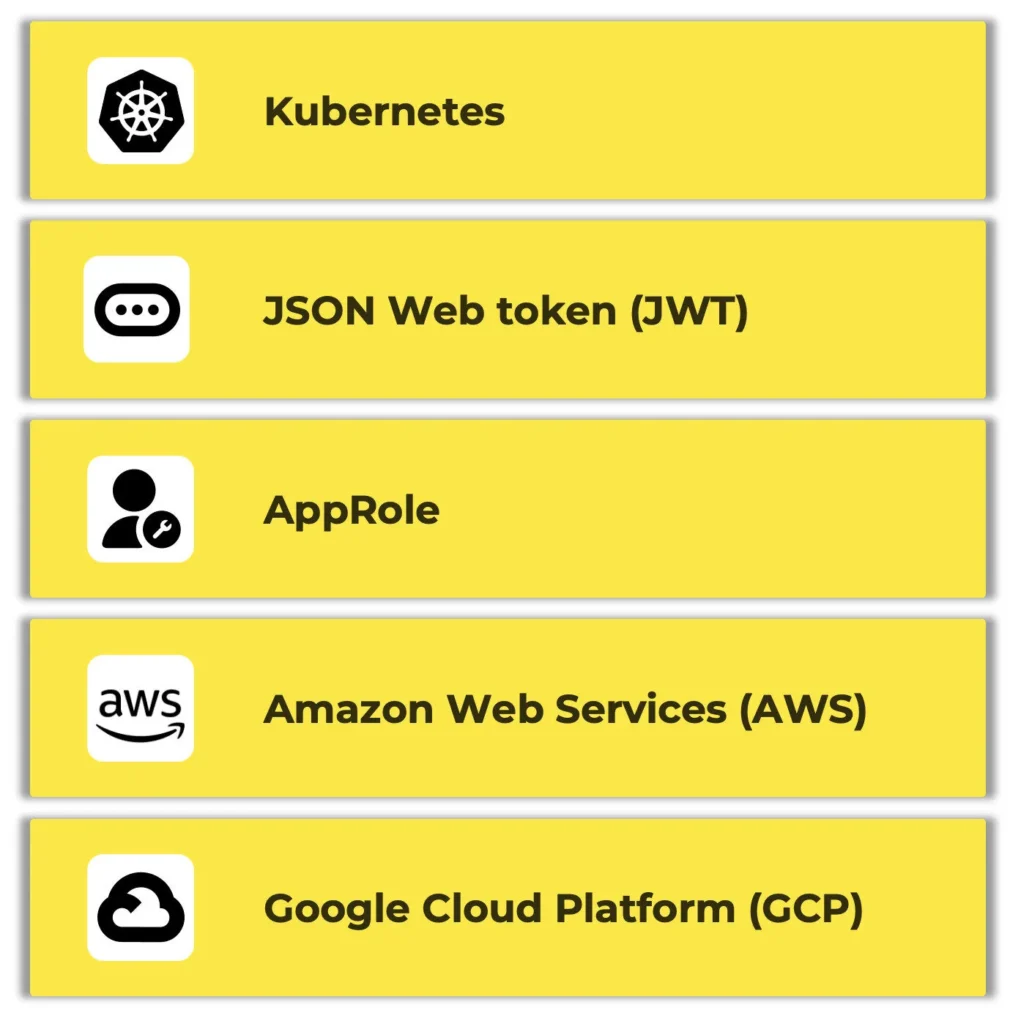
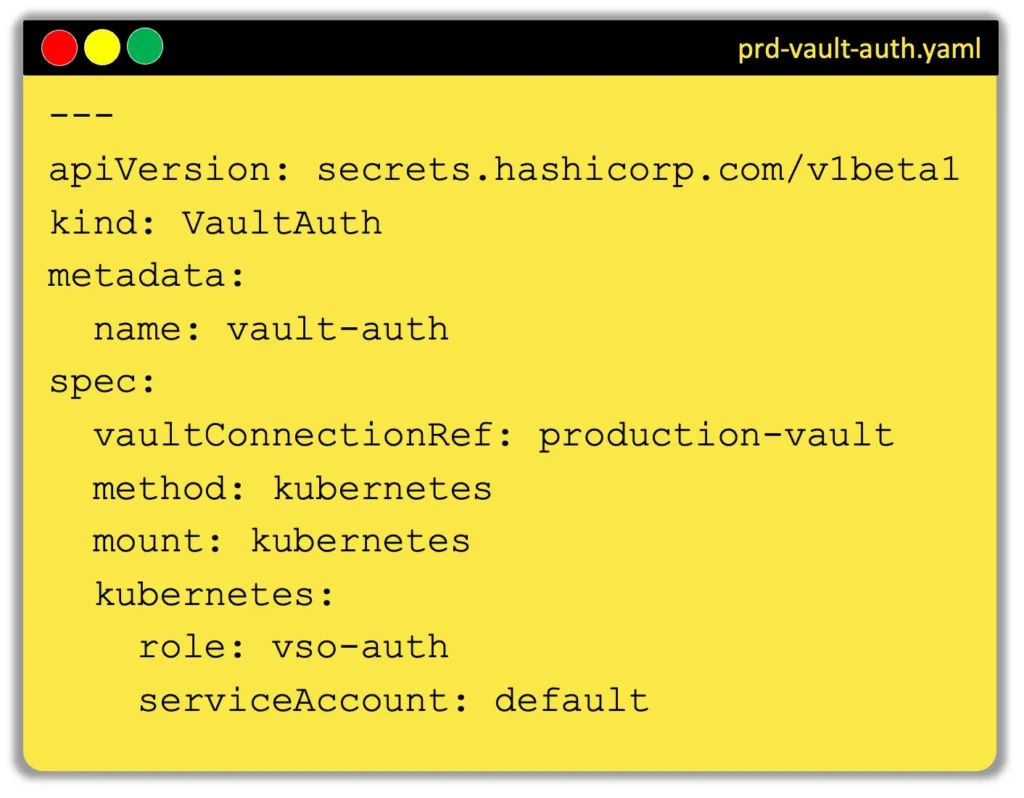
The VaultAuth CR defines how the operator should authenticate to Vault. Common methods include:
Kubernetes Auth Method (most popular when running in-cluster)
AppRole
Cloud-specific methods like AWS IAM or GCP Workload Identity
For Kubernetes auth, the operator will:
Send a service account token to the Vault Kubernetes auth mount.
Authenticate with a specific Vault role that has permissions to read required secrets.
The VaultAuth CR references the VaultConnection by name, linking the authentication method to the correct Vault cluster.
Step 3: Syncing Secrets from Vault into Kubernetes
With connectivity and authentication in place, it’s time to actually sync secrets.
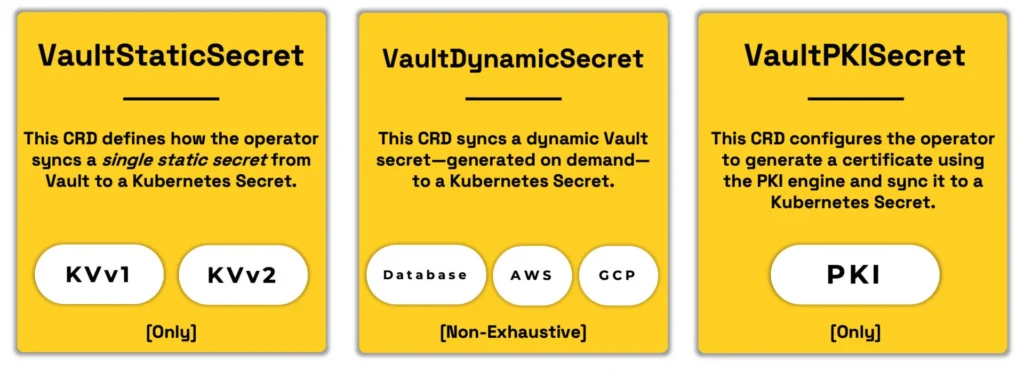
VSO supports three main CR types for syncing:
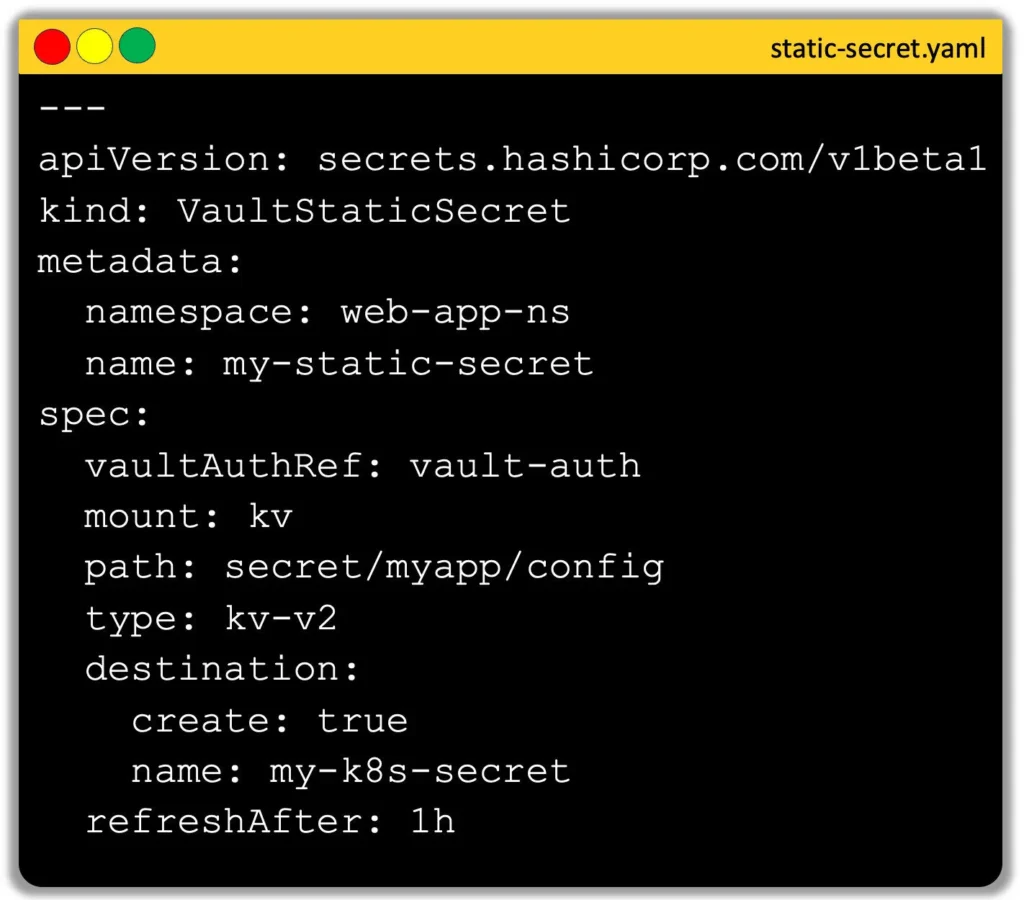
VaultStaticSecret – Syncs a manually managed static secret from the KV secrets engine (v1 or v2). Great for API keys or passwords that don’t change often.
VaultDynamicSecret – Retrieves on-demand credentials from dynamic secrets engines like Database, AWS, GCP, etc., and refreshes them before expiration.
VaultPKISecret – Generates and rotates TLS certificates using Vault’s PKI secrets engine, syncing them into Kubernetes as TLS secrets.
Kubernetes-native secret management – No Vault-specific code in your workloads.
Declarative workflows – Perfect for GitOps with CRDs stored in Git.
Secure, automated rotation – Dynamic and PKI secrets stay fresh without manual intervention.
Scalability – Easily manage secrets across multiple applications and namespaces.
Whether you need a one-off static API key or fully automated certificate rotation, VSO brings Vault’s power right into your Kubernetes environment—securely and seamlessly.
Ready to Try It?
With these three steps—Install, Configure, and Sync—you can integrate HashiCorp Vault into Kubernetes using the Vault Secrets Operator in a way that’s clean, maintainable, and production-ready.
If you’re studying for the HashiCorp Certified: Vault Associate exam, this is also a topic worth knowing inside and out. And if you’re running Kubernetes in production, it’s worth testing VSO in a dev or staging cluster to see just how much it can simplify your secret management.
Note: Make sure to check out my course here, where I include links and coupons to ensure all my content is accessible to everyone.
SPIRE is the default answer for SPIFFE workload identity, but it's not the only one. If you're already running HashiCorp Vault, you've got everything you need to issue SPIFFE-compliant SVIDs without adding another control plane.
Five of the Most Common HashiCorp Vault Implementation Mistakes That Compromise Security (And Cost You Money)
Introduction I’ve consulted with dozens of organizations running HashiCorp Vault in production. Different industries, different cloud providers, different team...
Introduction Most Vault implementations and strategies focus on platform features, including clusters, replication, authentication methods, and secrets...
Bryan Krausen is a leading AWS and HashiCorp educator with over a decade of experience helping professionals and businesses succeed in the cloud. As a top-rated Udemy instructor, Bryan has taught over 150,000 students worldwide, delivering practical, real-world insights that empower learners to thrive in the ever-evolving tech landscape.
A HashiCorp Ambassador and published author, Bryan holds multiple AWS and HashiCorp certifications. His courses combine clear explanations, hands-on labs, and real-world scenarios to ensure students don't just pass exams — they truly understand the technology.