
terraform
Feb 25, 2026
Stop Storing Cloud Credentials in Terraform State
Introduction Terraform state files contain everything Terraform needs to manage your infrastructure. That includes any cloud credentials you use to...
Read ArticleIntroduction I get asked this constantly by my students: “Is the Terraform Associate certification actually worth it, or is it just another cert to collect?”...
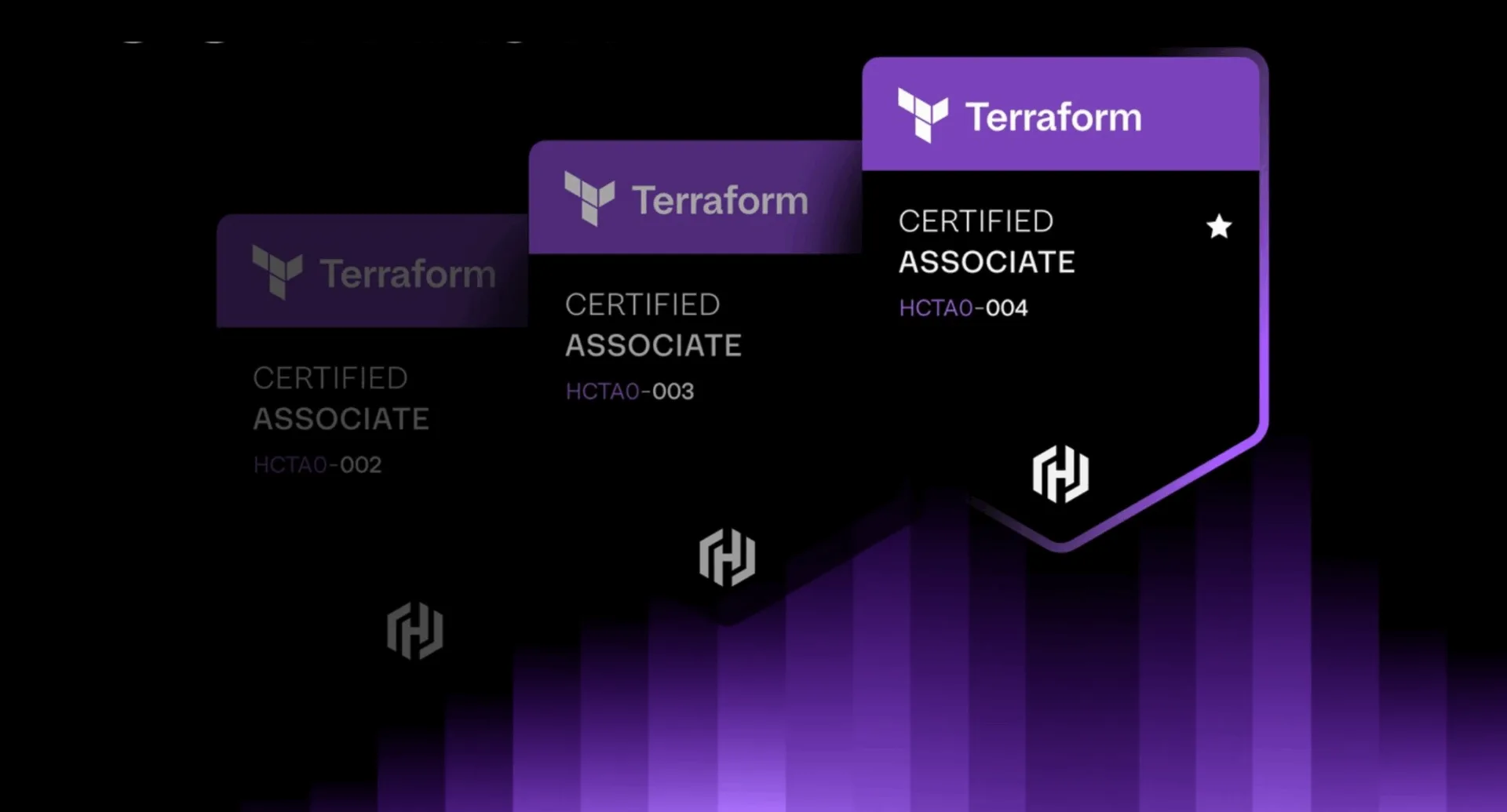
I get asked this constantly by my students: “Is the Terraform Associate certification actually worth it, or is it just another cert to collect?”
Fair question. The certification market is beyond saturated. New credentials pop up constantly, most fade into nothing within a few years, and even the established ones struggle to stay relevant as tech evolves.
But here’s the thing: the HashiCorp Certified Terraform Associate has stuck around. While other certifications lose credibility or become outdated, this one continues showing up in job requirements and maintains its reputation.
As someone who helps write the official exam, creates Terraform certification prep content, and works with thousands of students pursuing this cert, I’ve seen what makes it different. Let me break down exactly why this certification has maintained its value, even as so many others haven’t.
Most technical certifications are glorified memorization tests. They ask you to recall CLI syntax, service limits, or best practices you’ll just Google later anyway when working with the product.
The Terraform Associate is different.
Instead of “What does terraform init do?” you get real scenarios:
terraform plan and see 47 resources being destroyed. What’s the most likely cause?These are questions you can’t brain-dump your way through. You need to understand how Terraform actually behaves.
And that’s exactly what makes the cert valuable to employers – it proves you can solve real problems, not just regurgitate docs.
The Terraform Associate 003 exam was solid for years, but Terraform evolved faster than the exam did. By 2023, there was a noticeable gap between what the exam tested and what teams actually used in production.
HashiCorp fixed that with the 004 update.
What changed:
✅ Import blocks – The new declarative way to bring existing resources under Terraform management ✅ Moved blocks – Refactor code without destroying infrastructure ✅ Removed blocks – Stop managing resources without deleting them ✅ Modern state management – Remote backends, locking, drift detection ✅ HCP Terraform workflows – How teams actually collaborate in 2025
These aren’t theoretical additions. They are features I see teams starting to use every single day in production environments.
The exam now tests what you’ll actually do at work, not what Terraform looked like three years ago.
AWS, Azure, and GCP all have their own certifications. Those are valuable if you’re deep in that ecosystem.
But here’s the problem: they lock you into one platform.
The Terraform Associate proves you understand infrastructure-as-code principles that work across:
For candidates, this means one certification opens doors at companies using any cloud. For employers, it means the cert validates portable skills that won’t become obsolete if they switch cloud strategies.
I’ve seen students land roles at AWS shops, Azure teams, and multi-cloud enterprises—all with the same Terraform cert on their resume.
Let’s be honest: the certification market has a credibility problem.
Exam dumps. Brain dump sites. “Pass in 24 hours” courses. These have completely trashed the value of many certifications to the point where they barely mean anything beyond “I can memorize answers.”
The Terraform Associate has managed to maintain better integrity for a few reasons:
Consistent updates to the exam. HashiCorp has done a great job of consistently updating its most popular certification. Since being released in 2020, we’re now on version 004. Between these major versions, HashiCorp consistently evaluates existing questions, removes underperforming ones, and adds new ones.
New versions validate current knowledge. With the major updates and versions, HashiCorp removes objectives/sub-objectives and adds new ones based on changes to the tool and how it’s being used across organizations.
You get exposed fast if you cheat. Try to use Terraform professionally without actually understanding it, and your lack of knowledge shows up immediately. This natural filter reinforces the cert’s value.
When I see “HashiCorp Certified Terraform Associate” on a resume, I can reasonably assume the person has real Terraform skills. That trust is what keeps the certification relevant.
Certifications cost time and money. For the Terraform Associate, you’re looking at:
The return shows up quickly.
📈 Increased recruiter outreach within days of updating LinkedIn 💰 Better salary negotiations when changing jobs 🚪 Access to roles that filter for certified candidates 🧠 Discovered knowledge gaps they didn’t know they had
Some positions straight-up require the certification as a screening filter. Without it, your resume never reaches a human, regardless of your actual experience.
The cert doesn’t guarantee you a job or a raise, but it will consistently open doors that were previously closed.
Let me clear up some misconceptions I hear constantly:
Nope. I’ve had students with 3-6 months of hands-on Terraform experience pass on their first attempt.
The exam tests understanding of concepts and workflows, not years of accumulated tribal knowledge. Depth matters more than time.
Also wrong. I work with plenty of experienced professionals already employed in Terraform roles who pursue the cert for:
Good luck with that. Scenario-based questions require understanding how Terraform behaves in various situations. Reading docs helps, but you need hands-on experience to build the mental models required to work through complex scenarios.
Maybe that was true for older versions. The 004 exam is heavily focused on practical scenarios and real-world workflows. The theory tested directly relates to decisions you’ll make when using Terraform professionally.
The certification’s popularity doesn’t automatically make it right for you. Here’s when it makes sense:
Pursue the Terraform Associate if:
Hold off if:
The Terraform Associate certification hasn’t faded like most certs. It’s maintained its relevance through:
In a certification market full of noise, the Terraform Associate is one of the few that consistently signals what it claims: the ability to use Terraform effectively in production.
For professionals in infrastructure, DevOps, or cloud architecture, it has remained the standard for validating IaC expertise. That’s why it continues to be popular—and why it’ll likely stay relevant for years to come.
If you’re ready to master Terraform and pass the Associate 004 exam, I’ve built a comprehensive course that covers everything from basic syntax to advanced state management, modules, and real-world scenarios.
Check out my courses and grab discount coupons at btk.me/btk for hands-on training that will have you confidently deploying infrastructure in days, not months.
Note: Make sure to check out my course here, where I include links and coupons to ensure all my content is accessible to everyone.
Keep Reading
Introduction Terraform state files contain everything Terraform needs to manage your infrastructure. That includes any cloud credentials you use to...
Read Article
You’ve automated Terraform deployments in CI/CD pipelines with GitHub Actions or Harness, but have you kept state management manual by manually running...
Read Article
Introduction I get asked this question constantly in my courses and by teams I consult with: “Should we use CloudFormation or Terraform?” It’s a fair question...
Read Article
About the Instructor
Bryan Krausen is a leading AWS and HashiCorp educator with over a decade of experience helping professionals and businesses succeed in the cloud. As a top-rated Udemy instructor, Bryan has taught over 150,000 students worldwide, delivering practical, real-world insights that empower learners to thrive in the ever-evolving tech landscape.
A HashiCorp Ambassador and published author, Bryan holds multiple AWS and HashiCorp certifications. His courses combine clear explanations, hands-on labs, and real-world scenarios to ensure students don't just pass exams — they truly understand the technology.
150,000+
Students Worldwide
20+
Online Courses
4.7+
Star Rating
Turn these concepts into real skills. Explore Bryan's hands-on courses on Terraform, Vault, AWS, and more.
Explore Courses